
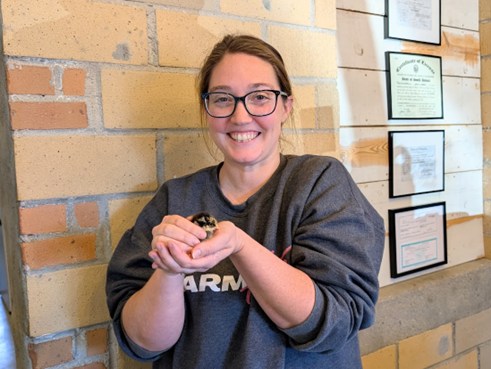
With interest from area residents about backyard poultry brought up at the recent city council meeting in March, here are some tips and tricks for bringing baby chicks home.
“When caring for newborn chicks the most important thing right off the bat is their brooder environment - the temperature, space, & safety are just as important as their food and water,” LVT Sadie Kalin, Gavins Point Veterinary clinic, explains.
When discussing the perfect temperature for the chicks, Kalin provides that answer, “As for the temperature the hatchery advises starting out at 105 degrees Fahrenheit the first hour of arrival and slowly working down to 95 degrees Fahrenheit. This can be done by adjusting heat lamp height. After the first week can start slowly lowering the temp by about 5 degrees per week to reach 70 degrees Fahrenheit." But heat lamps also come with important safety notices, “For safety - especially if using a heat lamp - you want the brooder made out of a material that is more temperature resistant (no cardboard).” she cautions.
But temperature isn’t the only thing to note for buying chicks this season. Baby chicks also need a safe environment to live in while they grow. “As for space 0.5 sq ft per chick is advised to allow ample room to move,” Kalin states, “A device with sides high enough to contain the chicks until they are large enough to leave the brooder and ideally a plan/set up that will prevent critters from getting them. If the brooder is square/rectangle, blocking the corners is advised to prevent them piling on top of each other. For bedding, wood chips or pellets are the safest, sand, sawdust, newspaper, and cedar chips are not advised,” she advises.
Diet is another important factor when raising chicks. The right diet will help them grow well.
“For food, they should be on a chick starter, ideally one with a coccidiosis prevention medication in it. They should remain on starter until about 6 weeks of age - from there a grower until they've reached laying age (for most breeds this is 16-20 weeks). Once laying age/have started laying they can switch to their layer feed. Be sure to use food containers that are short enough they can reach and that there are enough containers to chick ratio. The hatchery advises, for example, if using the trough style feeder a one foot trough is sufficient for 25 chicks. It is also important to note that meat bird/broiler chicks need a different food right from the start!” Kalin explains.
Including electrolytes in their water is also a way to ensure hydration for your chicks, “For water we advised using electrolytes in their water the first few days after arrival to help mitigate stress. Be sure to keep the water fresh and in a container that they cannot fall in/drown. A one gallon waterer is advised for every 25 chicks,” she concludes.
Knox county is one of the top poultry counties in the state while commercial poultry production is the reason for that status, there are still plenty of area residents who care for backyard flocks and bring baby chicks home every spring.